
CORALS
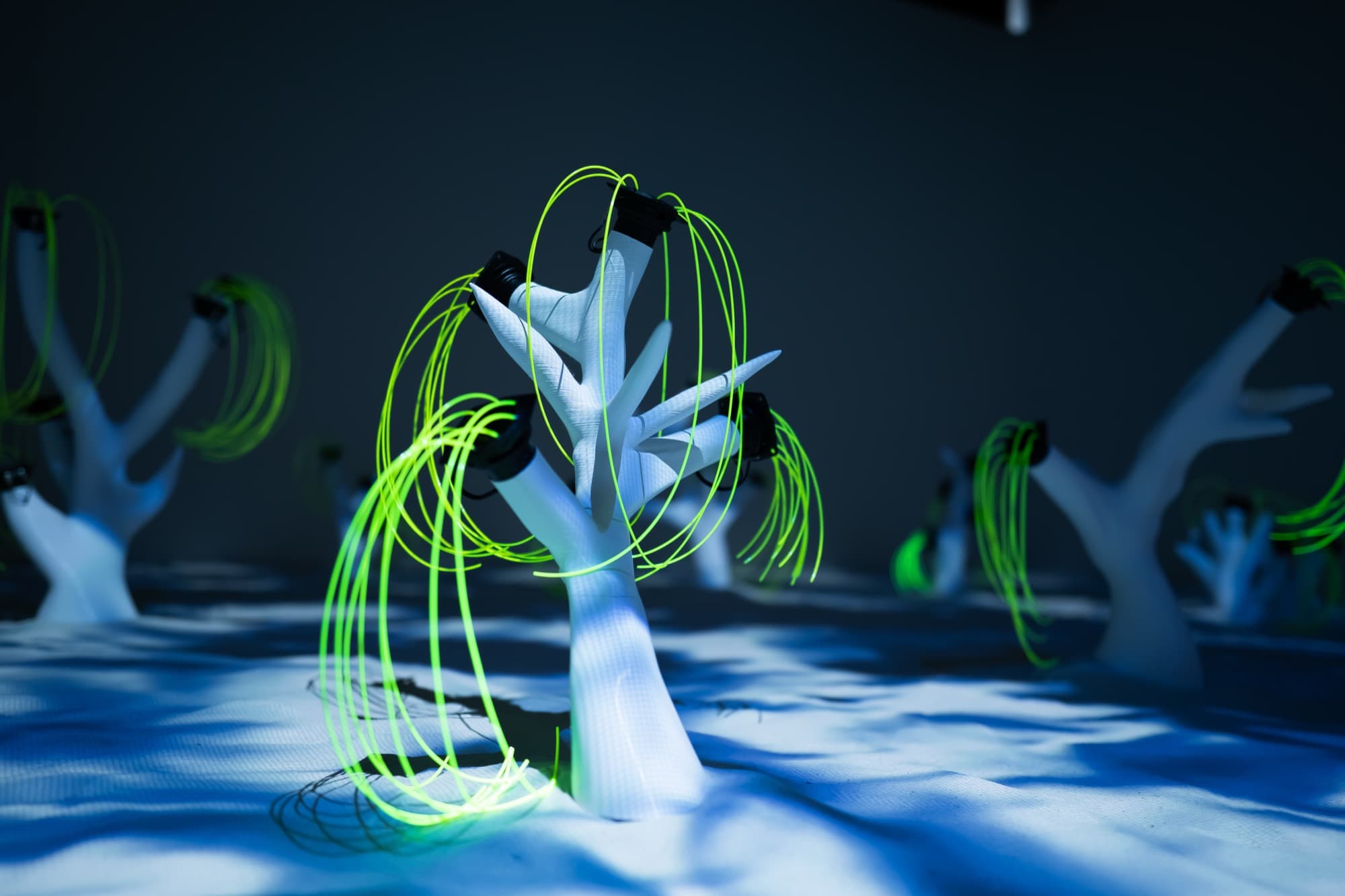
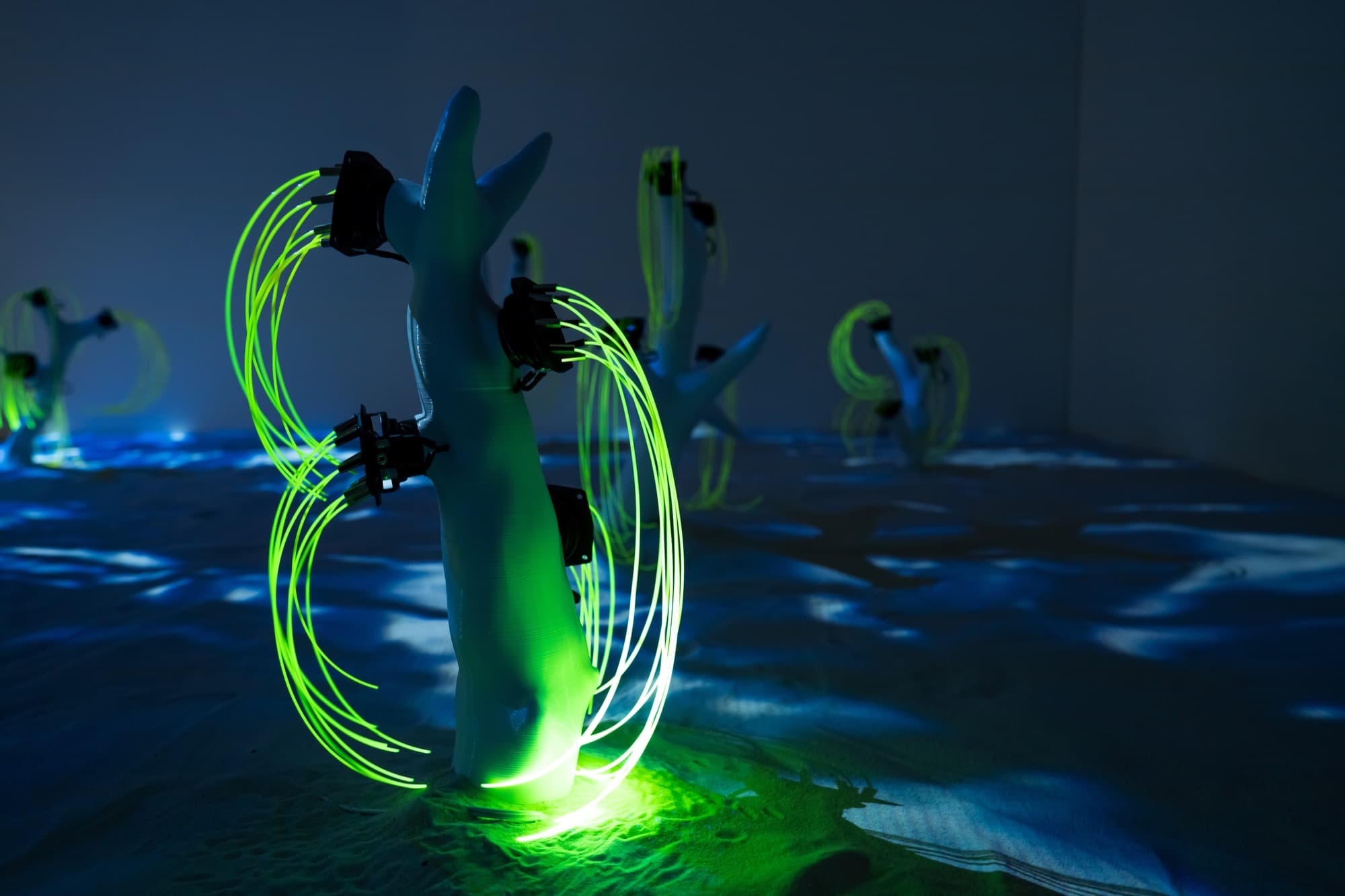
CORALS is a series of 3D-printed data-driven sculptures developed as visual reference to coral reefs.
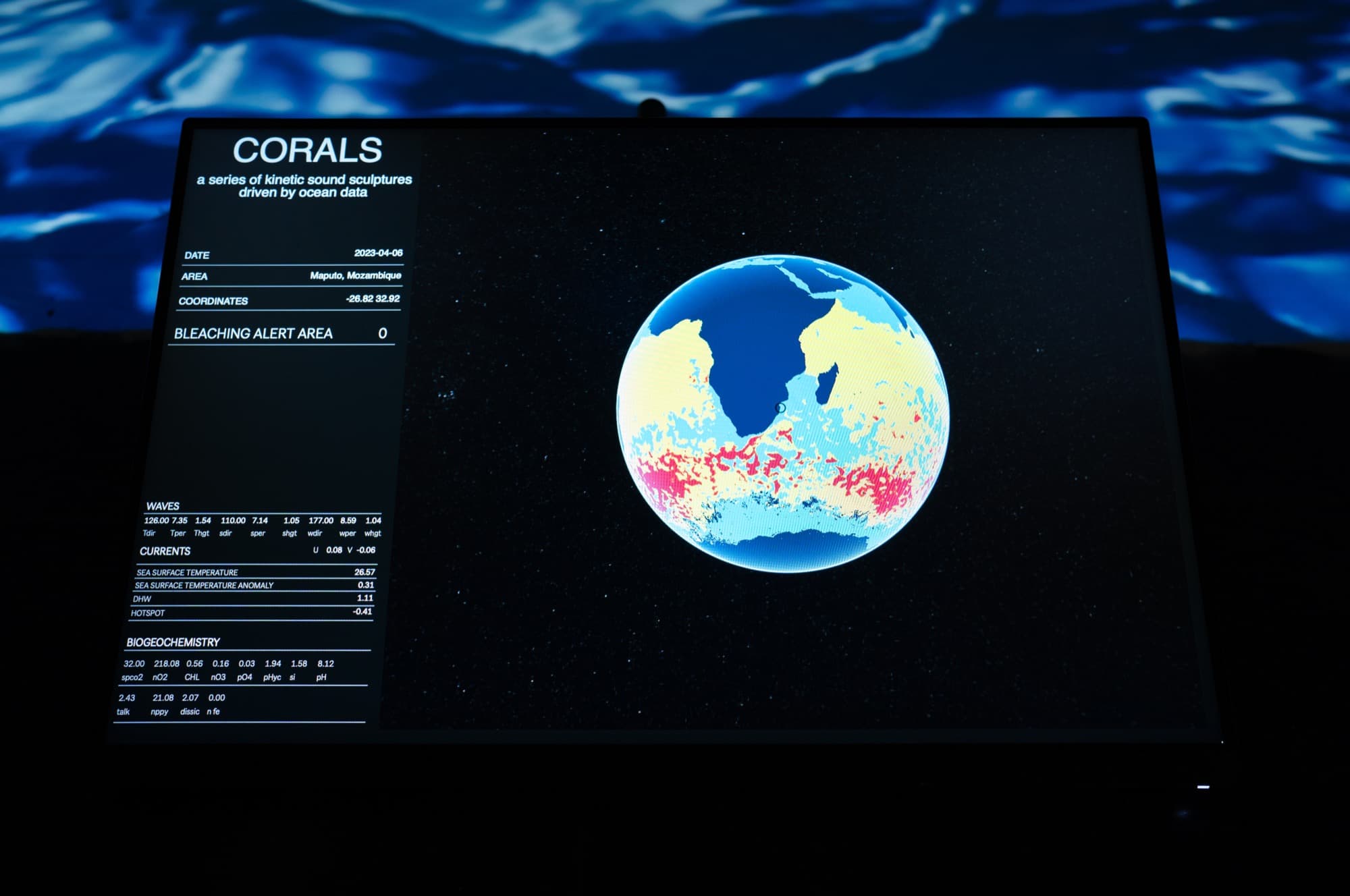
CORALS raises awareness about the precarious situation of coral reefs and the urgent need to establish a harmonious relationship with the underwater world. The installation features kinetic sound sculptures that resemble branch corals in an immersive underwater environment. Real-time data on ocean conditions and coral bleaching alert areas are visualized on a monitor, while the very same data feed into machine learning models to modulate sound, visuals, and movement of the installation.
The series of 3D-printed sculptures were developed as visual reference to coral reefs based on 3D scans provided by researchers at the Earth Observatory of Singapore. These sculptures are embedded in soundscapes, movement, visuals, and lighting generated by machine learning models. The audio elements combine the sounds of healthy coral reefs and recordings of shamanistic music from around the world, transforming CORALS into a “Techno Shaman.” The shamanistic music ranges from singings to the oceans, healing rituals, to death rituals.
The data that drives this metaphorical “Techno Shaman” comes from Bleaching Alert Areas (BAA) and is provided by NOAA Coral Reef Watch, NASA and Copernicus. It is comprised of sea surface temperatures, anomalies, waves, currents, and biological data. The system randomly selects a coral reef location and displays its situation at the selected time. Depending on the particular level of coral bleaching at the selected location, the machine learning model creates the specific “atmosphere” of the installation. Different aspects of the BAA data such as waves, currents, and sea surface temperature modulate the dynamics and pitch of the sound, movements of the sculptures, and dynamics in the lighting systems and visuals. The biological data interacts with various sound effects, which enhances the evolving soundscapes and creates more variations within the sonic experience.
CORALS represents the fragile marine ecosystem and the impact of coral bleaching. Environmental stress disrupts the symbiotic relationship between corals and their symbionts, resulting in coral bleaching and starvation. Coral bleaching damages biodiversity, which in turn affects human social and economic systems. Interestingly, scientists found that the sound of healthy coral reefs in destroyed ecosystems lures back fish communities and helps restoration. CORALS fuses this poetically with positive human action. Recognizing the human role as both part of the problem and part of the ecosystem, we must actively pursue positive change. By combining art, technology, and global cultural traditions, CORALS attempts to inspire positive action and preserve the fragile beauty of coral reefs.
CORALS by Marco Barotti, was created during the residency “Kunst der Verschränkung” at the Berlin Institute for the Foundations of Learning and Data (BIFOLD), in collaboration with the Science Gallery Berlin at the Technische Universität Berlin, with additional support by NEUSTARTplus-Stipendiums der Stiftung Kunstfonds.
Data source: NOAA Coral Reef Watch, NASA, Copernicus.
Coral research: St. John’s Island National Marine Laboratory, Tropical Marine Science Institute, National University of Singapore. The Coral Team: Jani Tanzil, Lionel Ng, Shaun Wee, Leong Wai, Ow Yong Wei Long, Jonas Khaw.
Corals research: Danwei Huang, Lee Kong Chian Natural History Museum, National University of Singapore.
Corals research: Antonio Beggiato, Coral Restoration Project Feridhoo.
Corals sound research: Too Yuen Min, Hari Vishnu, Mandar Chitre, Acoustic Research Laboratory, National University Of Singapore.
Corals sound research: Dr Timothy Lamont, Lancaster University.
Tech partner: Ambient Recording. Tech partner: Adam Audio.